

Trusted by Europe’s Top Development Teams
For Energy Infrastructure Projects: Transparent Cost Control, Maximum Investor Confidence.
Alasco is the financial management software for your energy infrastructure projects - built for structured cost controlling, transparent cash flow planning, and investor-ready reporting across the full project lifecycle.
These Infrastructure developers already trust in Alasco





ROLE AT A GLANCE
The Financial Management Demands of Energy Infrastructure Projects
Every euro spent must be traceable — because lenders demand maximum cost transparency.
The unique responsibility of energy infrastructure developers
Energy infrastructure developers carry full financial accountability. Every euro spent must be traceable. Every change order must be justified. Every budget change must be documented without gaps - because lenders demand maximum cost transparency. Coordinating with general contractors and specialist planners. Monitoring supply and installation contracts. Tracking budgets and approving invoices. Securing project financing. Reporting to capital providers who want every number to add up. Every single component - from the first budget to the final bank drawdown - ultimately lands on your shoulders.
Why energy infrastructure projects are getting harder to manage
Rising construction costs, volatile material prices, supply chain risks on critical components like photovoltaic (PV) modules, battery cells, transformers, and an increasingly complex regulatory environment are making cost management on energy infrastructure projects more demanding than ever. Investors are requiring more frequent and more detailed reporting. Project finance structures demand comprehensive, gapless cost records. Each of these circumstances compounds the others, making budgeting and cost forecasting in energy projects harder than at any previous point.
Combining asset types increases cost risk
Successful energy infrastructure developers rarely manage just one project at a time. Co-location projects combining PV and BESS are the dominant development trend. As project pipelines grow - from a single asset to multi-asset portfolios spanning solar parks, wind farms, and BESS - the demands on consolidated financial oversight grow exponentially.
WHAT’S AT STAKE
What Happens When Financial Management on Energy Infrastructure Projects Fails
Cost overruns nobody sees coming
A subcontractor reports a delay in PV module delivery. Six weeks delay in construction. Your finance team manually rebuilds the completion forecast in Excel. Which contractors are pushed back? What additional costs are triggered? How does the cashflow change? Meanwhile, change orders are negotiated on-site and confirmed by email. Each individual decision seems manageable - the cumulative picture does not. By the time the finance team spots the cost escalation, the contracts are already signed, the funds are drawn, and the room to act has passed. The overrun is locked in, and the only remaining question is who explains it to the investors.
Investors start doubting your project competence
Month-end. Your investors are expecting their cost report. Your project controller pulls data from contracts, the accounting export, the variation order log, and four weeks of email threads. Consolidation takes days. The numbers are already out of date by the time the report is sent. And next month, the reconstruction starts again. This isn't reporting - it's a monthly rebuild from fragments. Capital providers notice. And when they notice, they start questioning whether the project is actually under control.
Lack of transparency puts project success at risk
Change orders are negotiated on-site and confirmed by email. Approvals disappear into inboxes. Budget decisions are documented nowhere. Creeping cost increases remain invisible until there is no room left to act. When a sale or refinancing occurs, the counterparty expects complete documentation of all construction costs, change orders, and budget changes. What follows is a weeks-long search through archives and Excel versions. Documents are missing. Cost decisions can no longer be reconstructed. Good projects are valued lower because of poor documentation - or deals fall apart entirely.
Scalability is impossible
Managing five projects in Excel is painful. Twenty is impossible. Every project has its own spreadsheet, its own version of the truth - and none of them talk to each other. Basic questions like "Which projects are over budget?" or "Where are the biggest change order risks in the portfolio?" cannot be answered without manually pulling data from a dozen sources. As your project portfolio grows, the effort grows disproportionately - while your tools remain stuck at single-project scale. The result: you're forced to choose between accuracy and speed. Your team isn't the growth problem. The tools they're using are.
HOW ALASCO HELPS
How Alasco Gives Energy Infrastructure Projects Real-Time Financial Clarity
Before Alasco
Project data lives everywhere
Budget spreadsheets. Contract folders. Invoice trackers. Change orders buried in email threads. Every project has its own system, and finding answers means remembering where to look.
With Alasco
Everything lives in one place
Budgets, contracts, approvals, and documents - organized by project, contractor, and investor. Ask a question, find the answer in seconds. Stakeholders trust the data because it's all in one place.
Before Alasco
Approvals with no documented audit trail
Contractors chase payment updates. You have no visibility into invoice approval workflows. You're left digging through threads, chasing answers, and managing rising frustration.
With Alasco
Automated approval workflows
Configure approval paths with thresholds. Everyone sees where an invoice sits. You gain speed, control, and transparency - without emails or bottlenecks slowing the process.
Before Alasco
Contracts buried in email threads
A contractor disputes retention. You search through months of email for the signed contract and amendments - hoping you've found the latest version before it escalates.
With Alasco
Contract records with full context
Every contract lives with its contractor record - amendments, payments, and approved changes. Fee terms, retention, and invoice status are clear, with audit trails by default.
Before Alasco
Reports are reconstructed every month
Each client meeting means pulling data from spreadsheets, fixing broken formulas, and patching last-minute errors. Reports are outdated the moment you send them.
With Alasco
Reports that refresh with live data
Client reports pull live data: budget vs. forecast, variance, cash flow, invoice status. Everything updates automatically - so you review, not rebuild, before every meeting.
Before Alasco
Cashflow is educated guesswork
Your client's funder needs monthly drawdowns. You estimate based on contract timing and best guesses. Actual payments throw off your plan and undermine trust.
With Alasco
Adaptive cashflow forecasting
Forecast cash outflow using allocation curves. Update projections with real invoice data as contracts close. Funders get accurate numbers that adapt as projects evolve.
Before Alasco
No consolidated view across multiple projects
Developing five solar parks and two BESS projects in parallel means seven separate Excel models, seven separate status reports, and no single consolidated cost view. Portfolio-level variances are invisible - until one project threatens the integrity of the entire portfolio report. Investors and fund managers receive aggregated figures assembled manually, with no one able to guarantee their accuracy.
With Alasco
Portfolio transparency with one click - across all projects and asset classes
Alasco consolidates cost status, budget variances, and cashflow forecasts across all active projects in a single view - filterable by asset class, financing structure, or investor portfolio. Managing ten projects, you can see at a glance which are on track, where change order risks are emerging, and which payments are due in the next quarter. One dashboard. All projects. Always up-to-date.
THE OUTCOME
Measurable Results That Developers Achieve with Alasco
80%
Faster invoice processing with AI automation
4 weeks
To go live, guided by industry experts
Unlimited
Users always included – no per-seat pricing
resources
Tools and Insight for Financially-Driven Project Teams
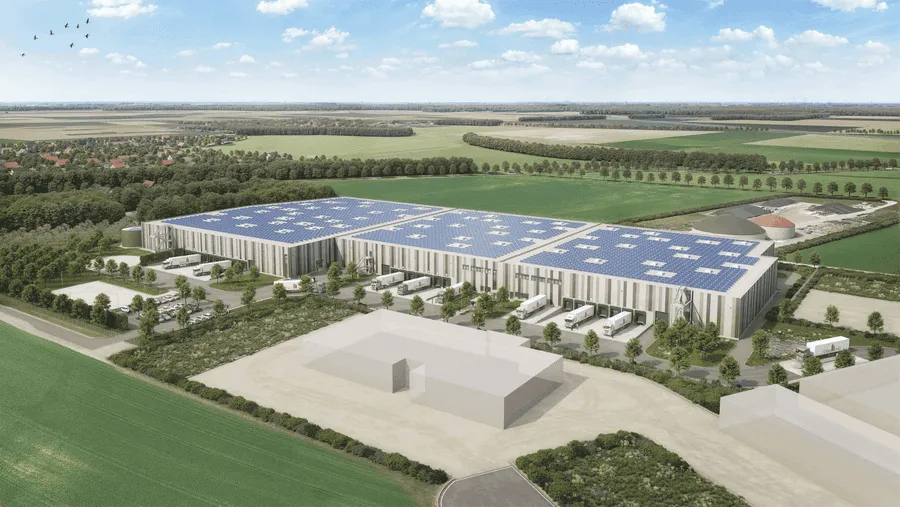
bauwo: BTS Logistics Hall Bockenem – Tailor-Made Construction Meets Sustainability and Efficiency

Why Building Your Own Financial Controlling Tool is a Costly Mistake

Goodbye Excel! Your guide to better invoicing and cost control in property development and management
FAQ
Frequently Asked Questions
Is Alasco suited to the specific requirements of energy infrastructure projects - solar parks, wind farms, BESS?
Yes. Alasco is a flexible financial management platform for capital-intensive construction projects - regardless of asset type. Budget structures and reporting formats are fully configurable to your projects: from the cost breakdown structure of a solar park to the parallel contractor management of a BESS project.
Can I customize reports for investors and auditors?
Yes. Reports are fully customizable, shareable, and audit-ready with reporting automation. You can add formulas like cost/m², run budget variance analysis, perform cost benchmarking and KPI tracking, and export in seconds.
Will external project stakeholders see where approvals or payments are stuck?
This is up to you. Stakeholders can be included in invoice approval workflows with role-based access, giving them clarity on where approvals sit and reducing late payment complaints while maintaining cost transparency.
Can I manage financing tranches and debt/equity flows?
Yes. Alasco is designed for capital-intensive projects, including CapEx planning and management, financing tranches, debt/equity management, and revenue from sales or leases.
How long does it take to implement Alasco for energy infrastructure projects?
With Alasco's pre-configured templates and cloud setup, implementation typically takes about 4 weeks - including configuration of the project-specific budget structure, data migration, and user training - enabling quick visibility and minimal disruption to ongoing construction projects.
Discover What Alasco Can Do for the Financial Management of Your Energy Infrastructure Projects
Join developers already using Alasco to manage energy infrastructure projects with full transparency, compliance, and budget control.